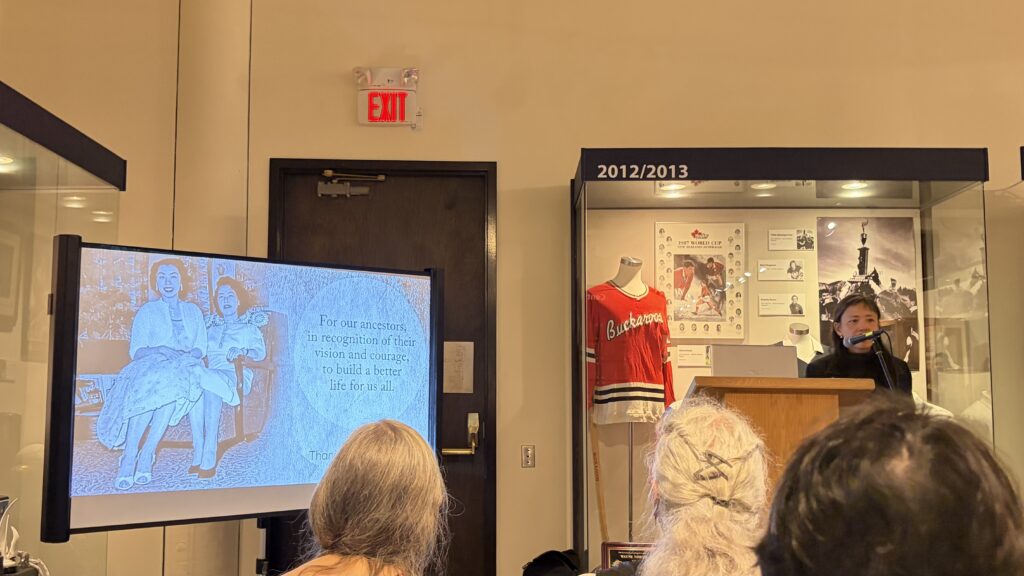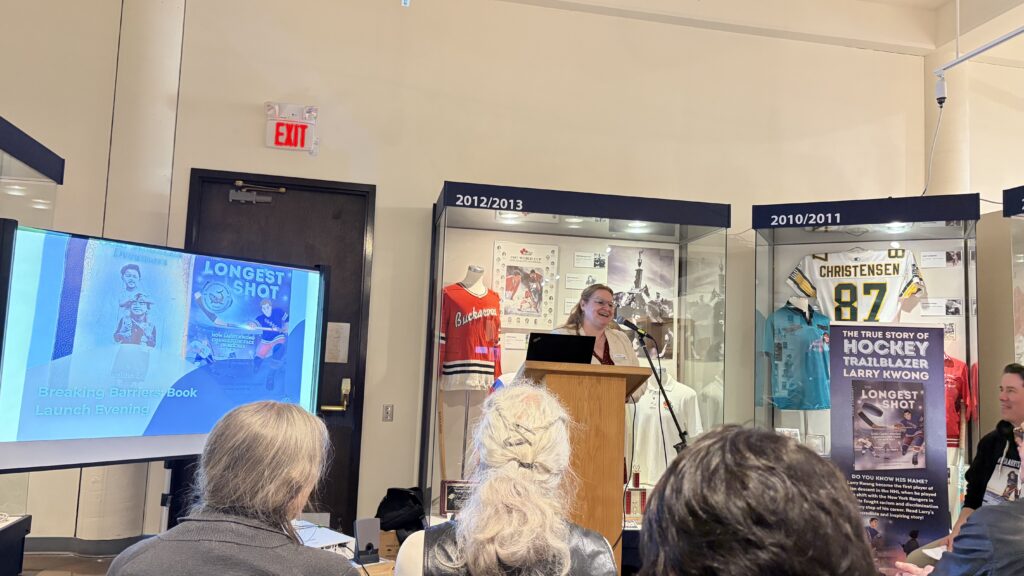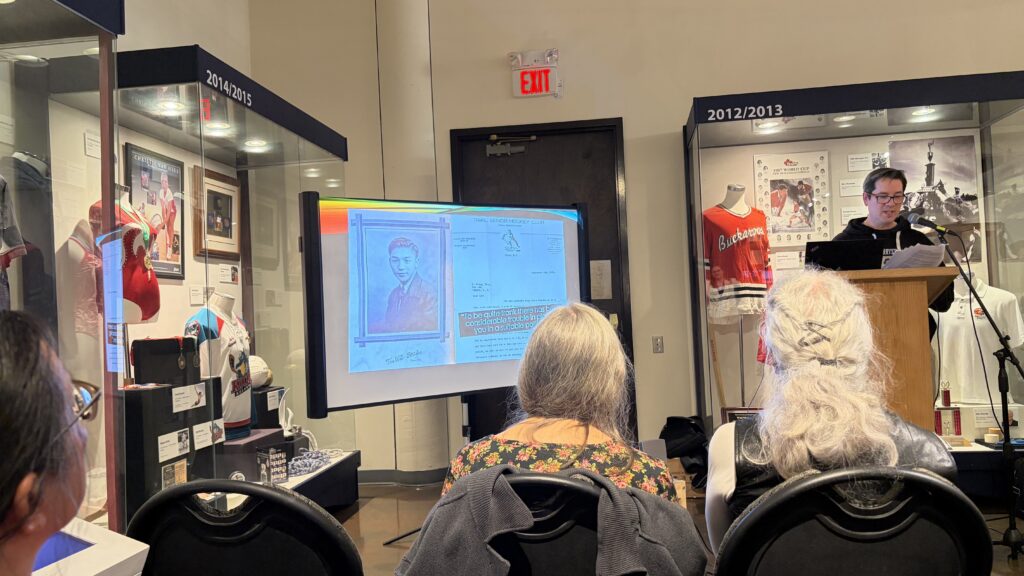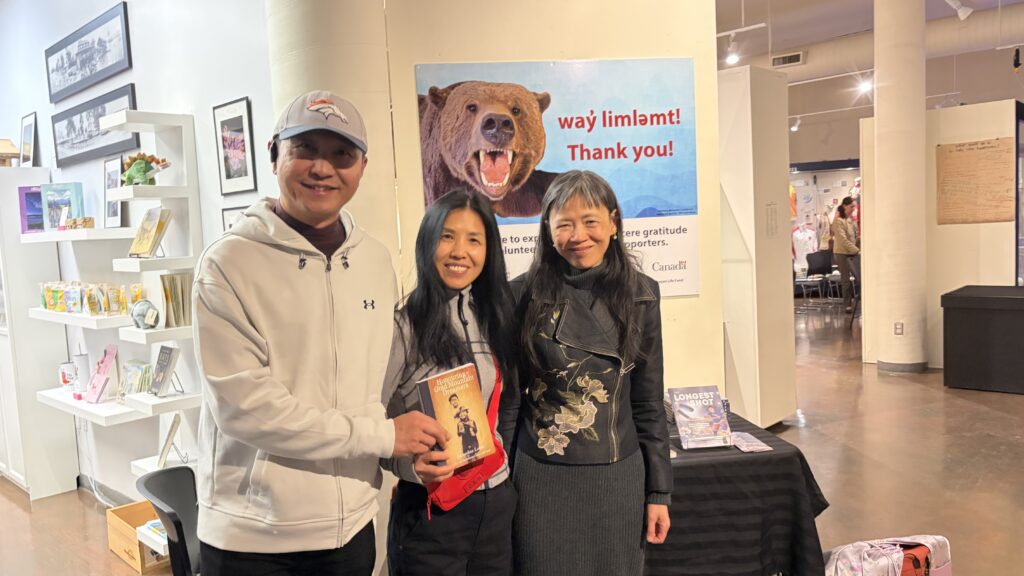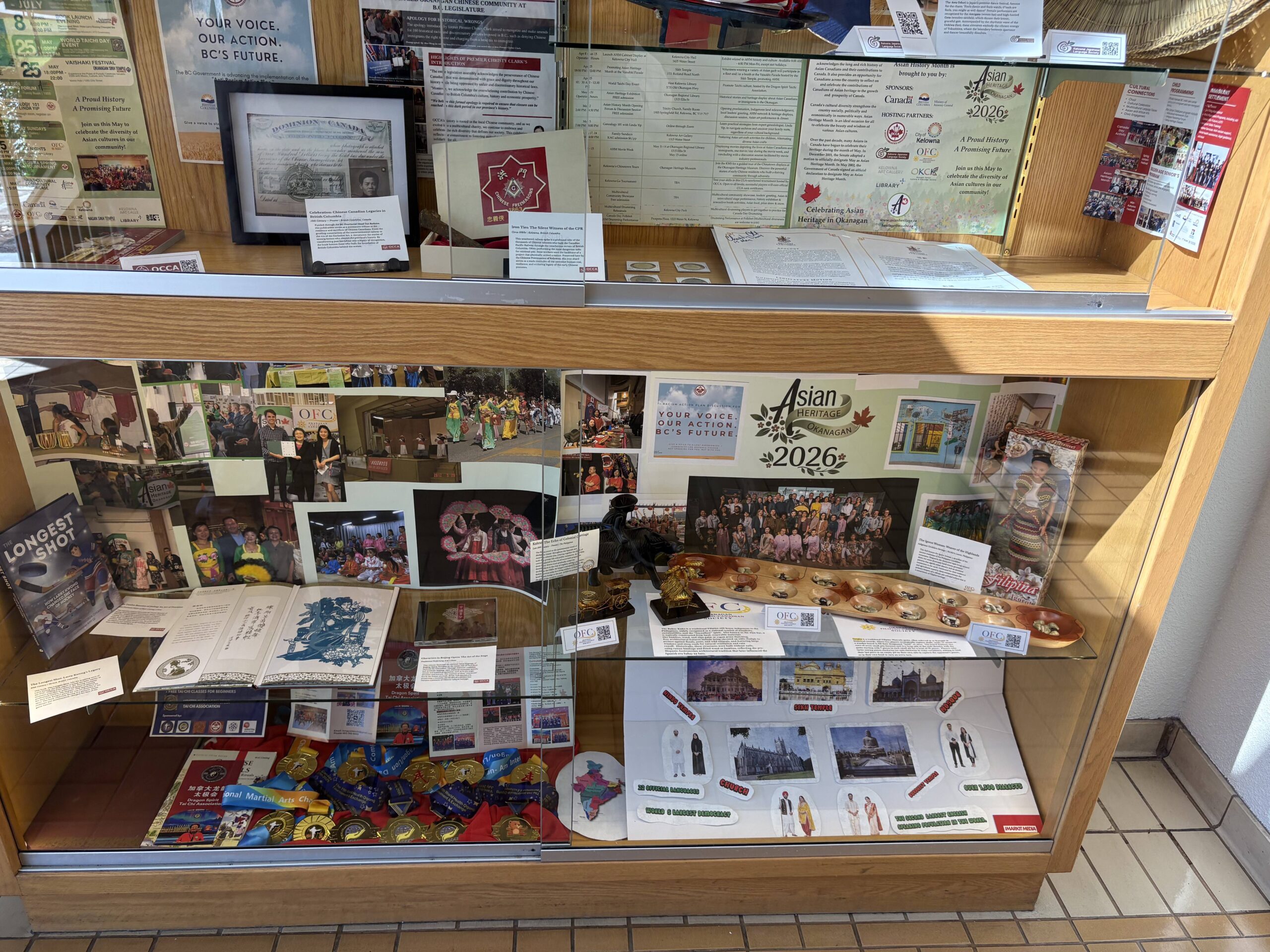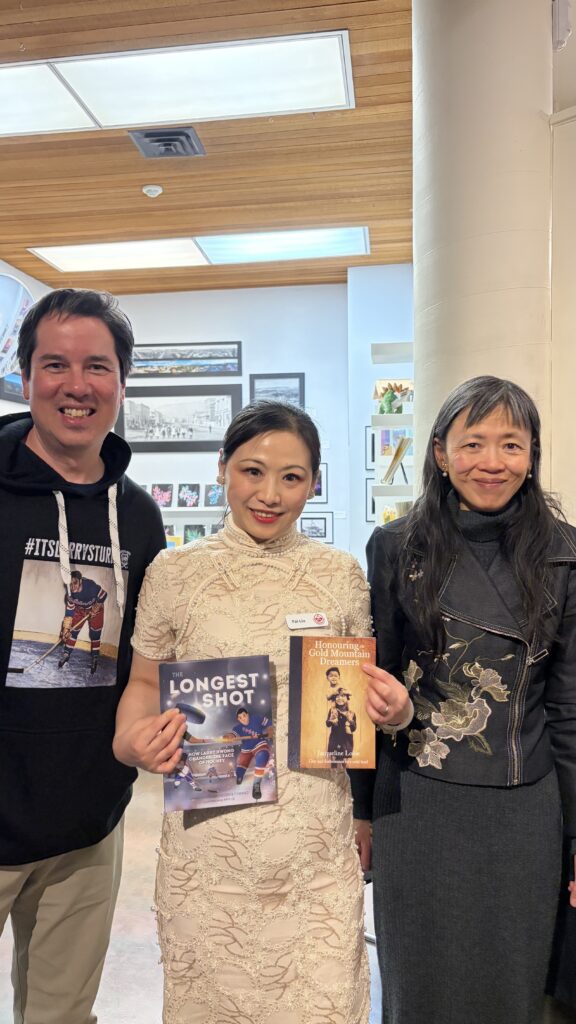
The OCCA Communities Association was proud to attend a recent book launch at the Okanagan Heritage Museum, on April 8. 2026, an evening that brought forward stories too often left out of mainstream narratives yet deeply embedded in Canadian history.
OCCA extends its sincere appreciation to the Museum for hosting this important gathering and recognizes the work of authors Chad Soon and Jacqueline Louie, whose books challenge, educate, and inspire.
OCCA was also pleased to have the following Chinese Canadian History Advisors and key contributors in attendance: Adrian Marr (Chair of OCCA Chinese Heritage Committee and descendant of Mar Fee and Mar Jok); Dr. Hua Meng (President and founding President of OCCA); Shui Lee (Chairman of Kelowna Chinese Freemasons); John Lee (descendant of Ben Lee); Prof. Duane Thomson and Carol Thomson (Lake Country Museum); Tun Wong and Kathleen Wong (descendant of Sue Lee Ping Wong); Pearl Lo and Arthur Lo (designer of Chinese Canadian Pioneers Commemorative Signage). Their presence reflects the strength of community collaboration and a shared commitment to preserving local Chinese Canadian history.
As Asian Heritage Month approaches, moments like this serve as a reminder that history is not just something we inherit but is something we actively choose to remember, preserve, and learn from. The stories shared through these works reflect both the barriers Asian Canadians have faced and the resilience that has defined their contributions to this country.
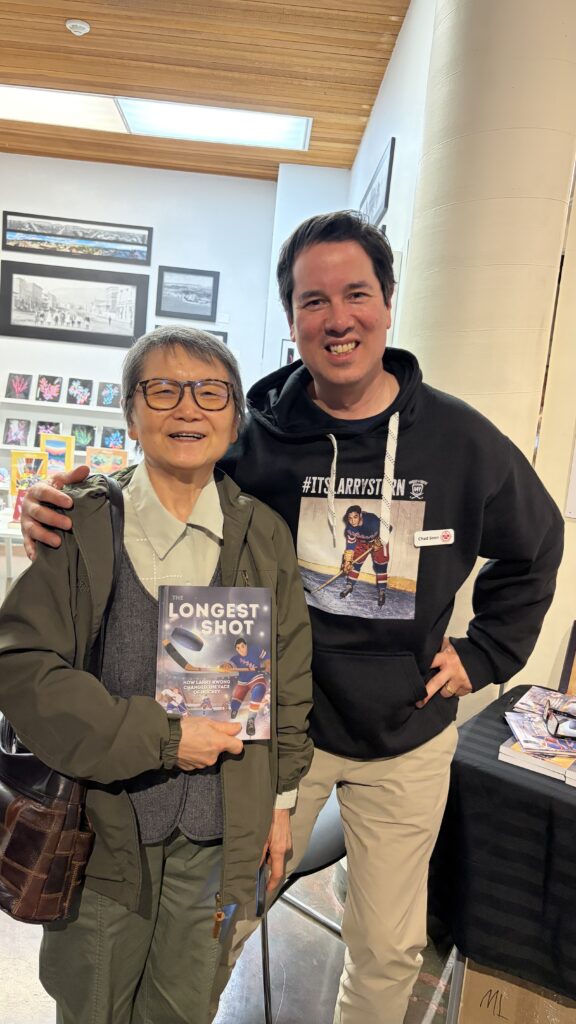
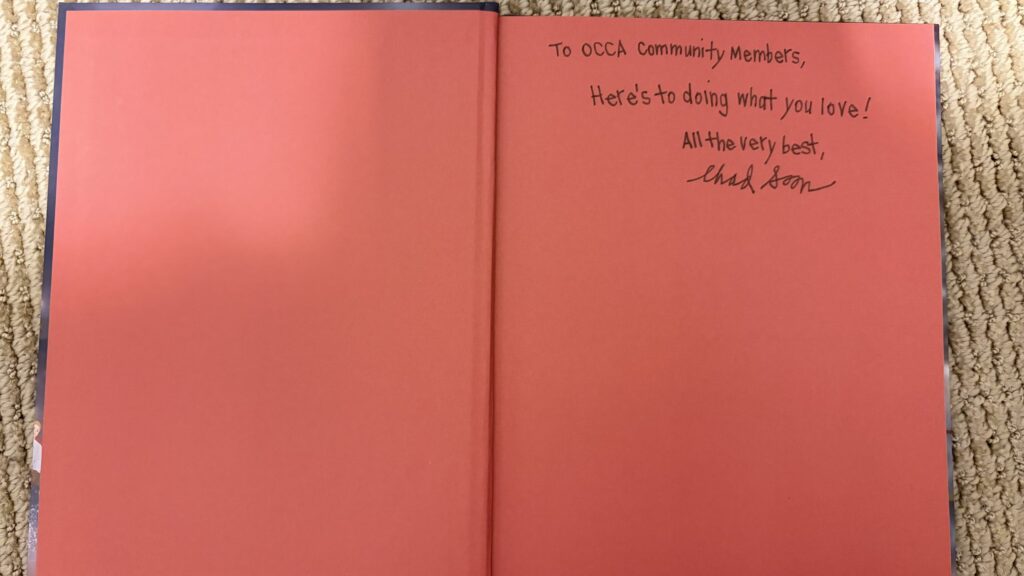
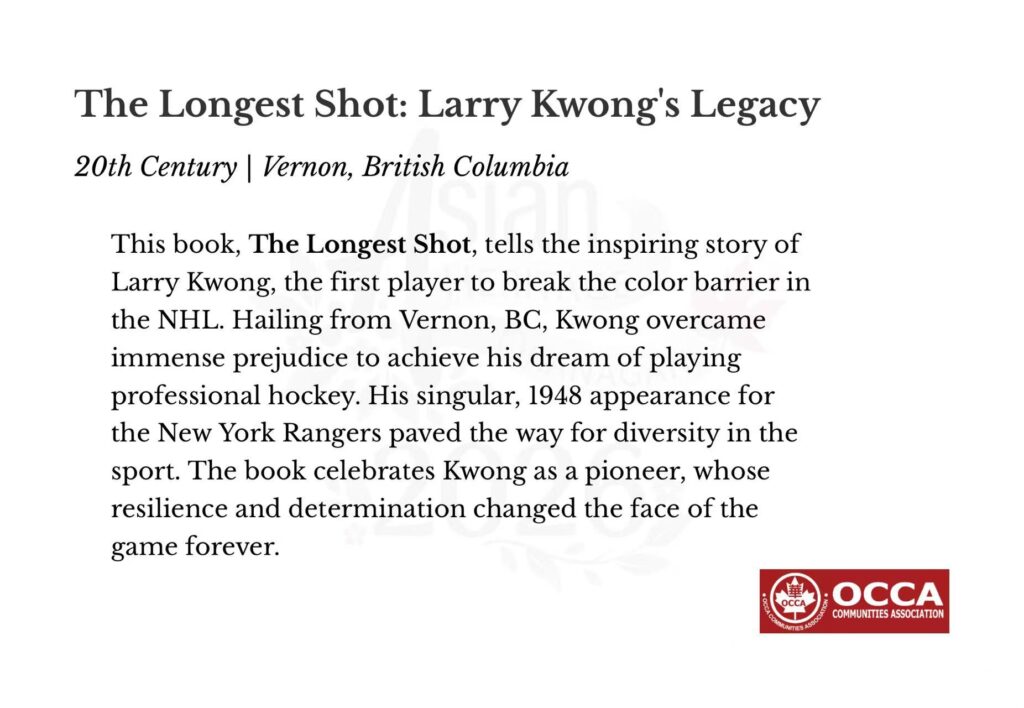
The Longest Shot: How Larry Kwong Changed the Face of Hockey is a powerful account of exclusion, perseverance, and quiet defiance. Co-authored by Chad Soon, the book follows Larry Kwong, who made history as the first player of Asian descent in the NHL. But his moment on the ice, just one shift with the New York Rangers, only scratches the surface. The book traces Kwong’s journey from growing up in Vernon’s Chinatown, where opportunities were limited by racism, to navigating a hockey system that did not expect, or accept, him.
Despite extraordinary talent, Kwong was repeatedly overlooked, his achievements minimized in a league and a country not yet ready to fully embrace diversity. And yet, he persisted. His story is about what it costs to break the cultural and color barrier, and how many others never got the same chance.
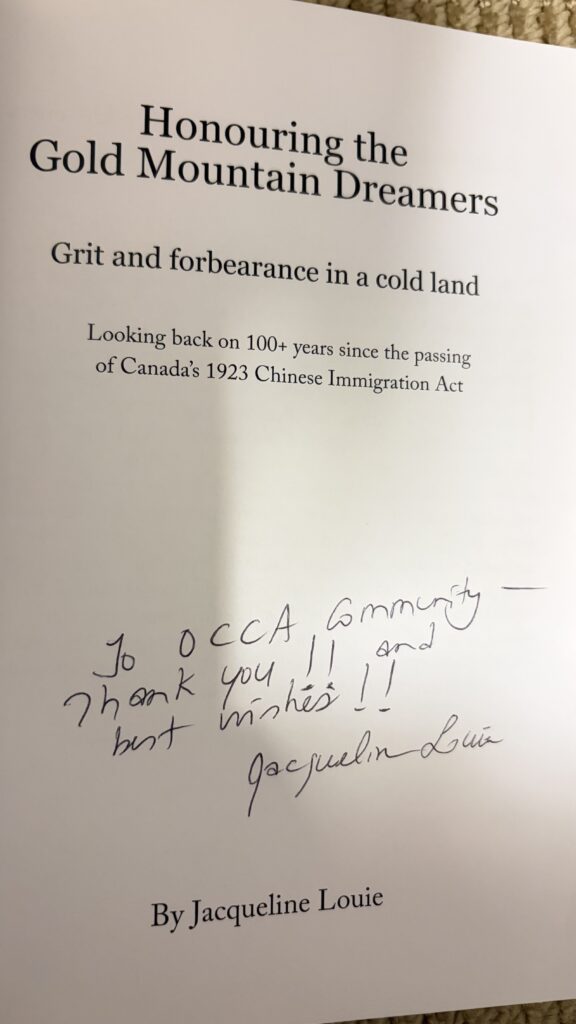
In Honouring the Gold Mountain Dreamers, Jacqueline Louie takes readers into a deeply emotional and complex chapter of Canadian history. The term “Gold Mountain” once symbolized hope, a promise of opportunity that drew thousands of Chinese immigrants to Canada. What followed, however, was a reality shaped by exclusion, hardship, and systemic discrimination.
Louie’s work carefully documents the human impact of the Chinese Immigration Act of 1923, a policy that effectively halted Chinese immigration and fractured families for generations. Through personal narratives, archival research, and community memory, the book captures what it meant to live through that period, not just in policy terms, but in everyday life. It tells the stories of fathers separated from children, of communities forced into isolation, and of individuals who continued to build lives despite being treated as outsiders in the country they helped develop.
This history is not distant, and it is not disconnected from the present. It directly informs the work being carried forward through OCCA’s Okanagan Chinese Canadian History Project, led by Adrian Marr, Chair of the OCCA Chinese Heritage Committee, and coordinated by Kevin Chu, with the support of long-standing community partnerships. The project is rooted in the belief that preserving history is not optional; it is essential. By documenting oral histories, safeguarding archives, and amplifying community voices, the initiative ensures that the stories explored in works like Honouring the Gold Mountain Dreamers are not lost to time.
Because when history is forgotten, it is easier to repeat. And when it is preserved, it becomes a tool for understanding, accountability, and building something better.
As Asian Heritage Month approaches, OCCA looks forward to continuing to spotlight stories like these, stories that challenge dominant narratives, honour lived experiences, and reflect the true diversity of Canadian history.